
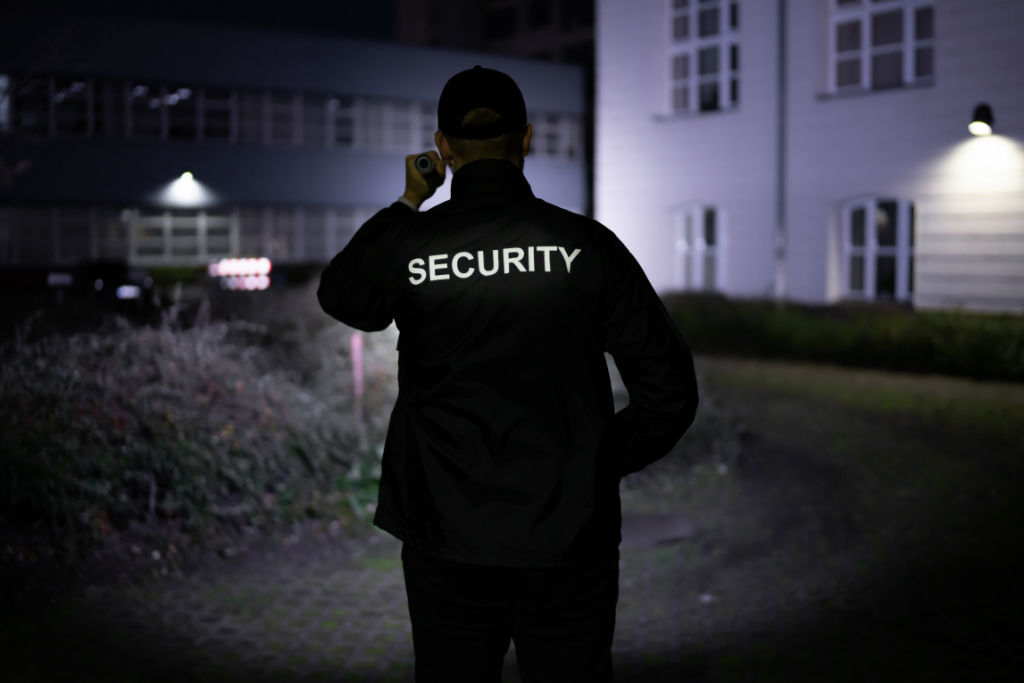
A security officer patrol can be a super-important way to keep a site protected – but it only delivers real value when it’s planned around the realities of that site. When it’s about guesswork or generic schedules, the protection starts to split.
To explain it better:
- Some properties need frequent, visible patrols throughout the night.
- Other properties only need targeted checks during specific risk windows.
So which is right for your site? The key is understanding what actually influences how often patrols should happen.
So rather than focusing on arbitrary timeframes, the most professional security providers look at a small set of practical factors to determine the right patrol approach for each site.
We’ve come up with the 7 key things that influence how often a security officer should patrol:
7 Things influencing how often a security officer should patrol
The big rule is that there’s no fixed schedule that works everywhere – rather, patrol frequency is shaped by the practical realities of each site:
1. The level of risk at the site
The higher the risk, the more often patrols are needed.
Sites with:
- Valuable assets
- Previous incidents
- Public access
- Or limited natural surveillance…
… usually require more frequent checks.
Patrols act as both a deterrent and an early warning system, identifying issues before they escalate into a major problem.
Low-risk locations, by contrast, may only need periodic patrols focused on reassurance and compliance rather than constant monitoring.
2. When the site is most vulnerable
The most effective patrols are timed around vulnerability – not convenience. Many incidents occur when sites are unoccupied or lightly staffed:
- After hours
- Overnight
- Or during weekends.
This is where security on patrol plays its most crucial role – providing coverage precisely when there are fewer eyes on the property and less immediate oversight.
3. The size and layout of the property
To put it simply, larger sites take longer to patrol properly. A single quick visit may not provide meaningful coverage for a multi-building complex, construction site, or industrial facility.
In these cases, patrol frequency often increases to ensure all areas are checked thoroughly and consistently, rather than relying on one superficial inspection.
4. The purpose of the patrol
What is security patrol actually meant to achieve? Just thinking about the answer for your particular site starts to give clarity about how often it should occur.
Because patrols may be designed to:
- Deter crime
- Verify alarms
- Check access points
- Conduct welfare checks
- Or confirm that a site is secure.
In other words, a patrol focused on alarm response will be scheduled differently from one aimed at visible deterrence or after-hours monitoring. It’s the purpose that drives the answer to ‘how often’.
5. Integration with other security measures
Patrols are great – but it’s not everything! All of these all also influence how patrols are structured:
- CCTV
- Access control
- Alarm systems and more.
For example, sites with monitored alarms may rely on patrols that activate in response to alerts, while locations without electronic systems may require more frequent physical checks. A well-planned security guard patrol complements the technology that’s in place, rather than duplicating it.
6. Incident history & local conditions
Past behaviour is one of the best indicators of future risk. In other words, sites that have experienced:
- Break-ins
- Vandalism
- Or repeated trespassing …
… often benefit from increased patrol presence, especially during known high-risk periods.
Local conditions also matter – what the surrounding land is used for, who’s likely to be walking around, and what else typically goes on at the site. It all affects how regularly patrols should be conducted.
7. The need for unpredictability
If the patrol patterns become predictable, the wrong eyes may start to notice. In other words, if patrols occur at pretty much the exact same times every night, they become easier to predict … and avoid.
Professional providers often vary patrols’ timing and routes so security patrolling remains visible – but unpredictable. This doesn’t necessarily mean more patrols, it just means smarter patrols.
Why there’s no ‘One-Size-Fits-All’ schedule
It’s tempting to ask for a fixed answer to our question about ‘how often’ – and it would be easy for us to give an answer like every 30 minutes, every hour, once per night, once every three nights. But in the real world, effective patrol planning is about matching the coverage to the risk. It’s never about ticking boxes or just providing (false) peace of mind.
If there are too few patrols, gaps can be left. And too many poorly planned patrols can waste budget without improving the outcomes. The right balance comes from assessing the site properly and adjusting the patrol activity accordingly, as the conditions change.
Getting patrol frequency right
When patrols are planned correctly, they deliver:
- Deterrence
- Early detection
- True peace of mind.
So the focus shouldn’t be on ramping up what you spend – it should always be about why a patrol is happening, when it’s needed most, and how it fits into the broader security strategy.
If you’re unsure what level of patrol coverage is appropriate for your property, speaking with an experienced provider makes all the difference.
Speak with Sydney security specialists
The team at CitiGuard Protection Services designs tailored patrol schedules based on real-world risks, not generic assumptions or a tick-the-box approach. Get clear advice and a patrol solution tailored to your site by contacting our friendly team today.