
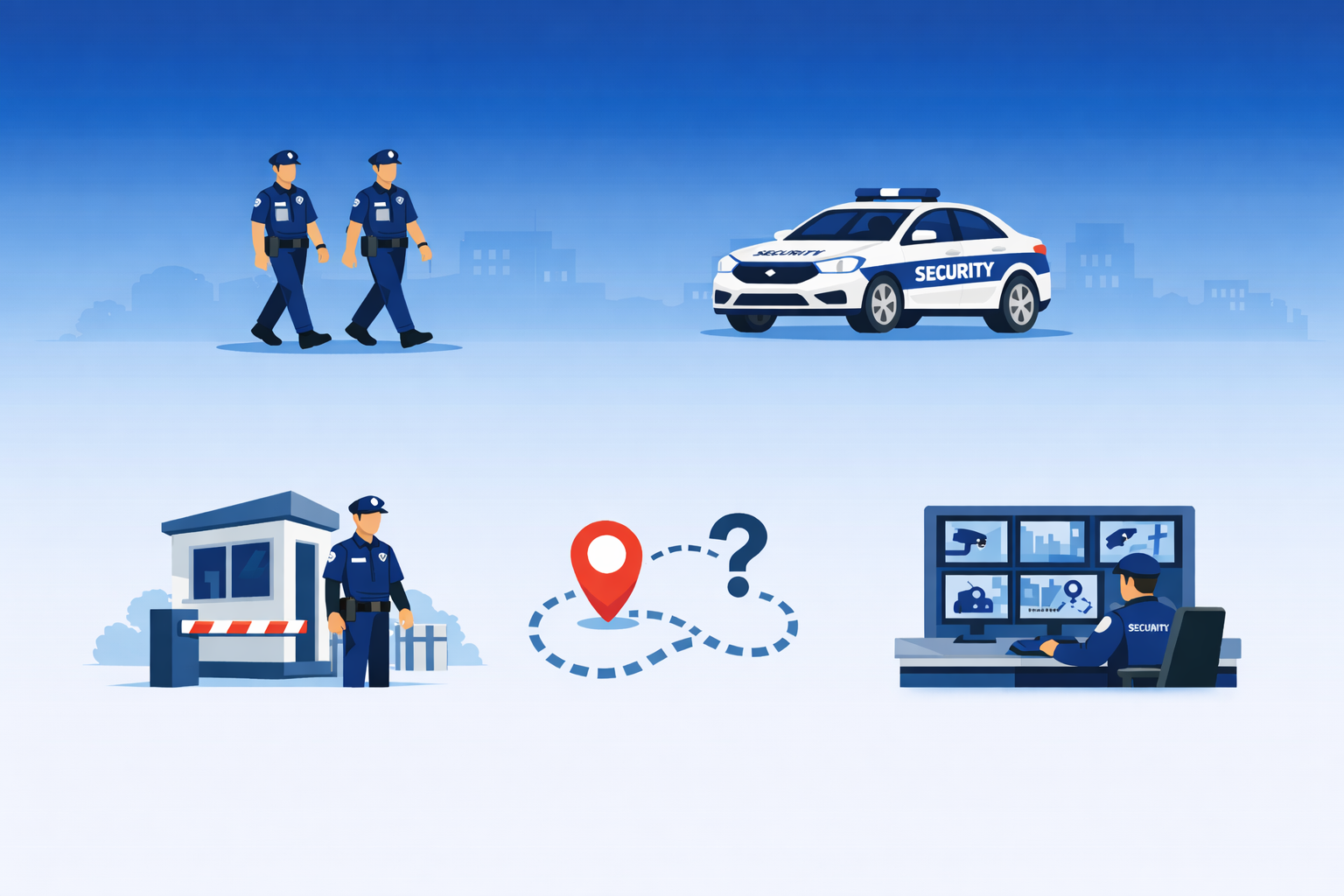
When people think about site protection, it’s alarms and cameras that usually come to mind first these days. But for many properties across Sydney, a well-planned security patrol strategy remains one of the most effective ways to prevent incidents before they occur. And while there’s plenty of discussion online about guards and monitoring, far less clarity is out there around the specific types of patrols available – and how they are actually used in real-world security planning. That lack of clarity can make it harder for businesses, councils, and property managers just like you to choose the right approach.
In our exclusive guide, we’ll explain:
- The most common types of security patrols
- How they work
- And when each is most effective, using practical examples that reflect how professional patrol services operate across Sydney.
The 5 main security patrol options … Explained
Below are the patrol formats most commonly used by professional security providers. While each can operate independently, they are often combined to create layered, site-specific protection.
Let’s get started:
1. Mobile security patrols
Mobile patrols involve licensed guards travelling between sites in marked or unmarked vehicles, conducting scheduled or random inspections. This approach is highly cost-effective for larger areas or multiple locations that don’t require a full-time on-site guard.
Mobile patrols are particularly effective for:
- Commercial and industrial properties
- Car parks and strata complexes
- Construction sites
- After-hours protection.
Their greatest strength lies in visibility and unpredictability, which are key deterrents for opportunistic crime.
2. Lock-up & unlock patrol services
Lock-up patrols focus on ensuring a site is properly secured at closing time. Guards check doors, gates, access points, alarms, and lighting, reducing the risk caused by human error.
This patrol type is commonly used by:
- Retail premises
- Offices and medical facilities
- Schools and community buildings.
It’s a practical option for organisations wanting reassurance that their site is secure after staff leave.
3. Alarm response patrols
Alarm response patrols are activated when an alarm system triggers. Instead of just relying purely on police attendance, a trained patrol unit attends the site to assess the situation, verify the cause, and escalate appropriately.
This method:
- Reduces false alarm call-outs
- Provides faster on-site verification
- Protects property while minimising disruption.
Alarm response is often integrated with back-to-base monitoring for a seamless security solution.
4. Foot patrols & internal site checks
Foot patrols are used where vehicle access is limited or where closer inspection is required. Guards physically walk the site, checking internal and external areas for hazards, breaches, or suspicious activity.
They are commonly used:
- Inside buildings
- In pedestrian-only zones
- As part of high-visibility deterrence.
While foot patrols are sometimes discussed separately, they are frequently combined with mobile patrol coverage rather than operating in isolation.
5. Welfare checks & staff escort patrols
Some patrol services are designed to protect people rather than property alone. Welfare checks and staff escorts support employee safety, particularly after hours or in isolated environments.
These services are often requested by:
- Councils
- Healthcare facilities
- Businesses with late-night operations.
They add a human layer of reassurance that technology alone cannot provide.
Choosing the right patrol structure
There is no single ‘best’ approach – the most effective security patrols types depend on factors such as site size, risk level, operating hours, and budget.
A professional provider will assess these variables and design a patrol plan that balances deterrence, response capability, and cost efficiency. In many cases, combining mobile patrols with alarm response and lock-up checks delivers the strongest results.
Understanding how each security patrol functions helps decision-makers invest in protection that actually fits their environment, rather than relying on assumptions or generic solutions.
Why patrols still matter
Despite exciting and important advances in technology, security patrols still remain a critical part of modern protection strategies. The presence of trained, experienced, licensed personnel – supported by communication equipment and rapid escalation pathways – delivers accountability, adaptability, and real-time judgement that automated systems simply cannot replicate.
Speak with Sydney security specialists
Thinking about patrol services for your property? The friendly team at CitiGuard can help design a solution tailored to your site and risk profile. Call or enquire online to arrange a security consultation.